WAYMO GO / BUSINESS BRIEF

One event. Two outcomes.

A paid experience for technology professionals. A focused opportunity to build investor relationships. One evening designed to do both.

Explore the financials
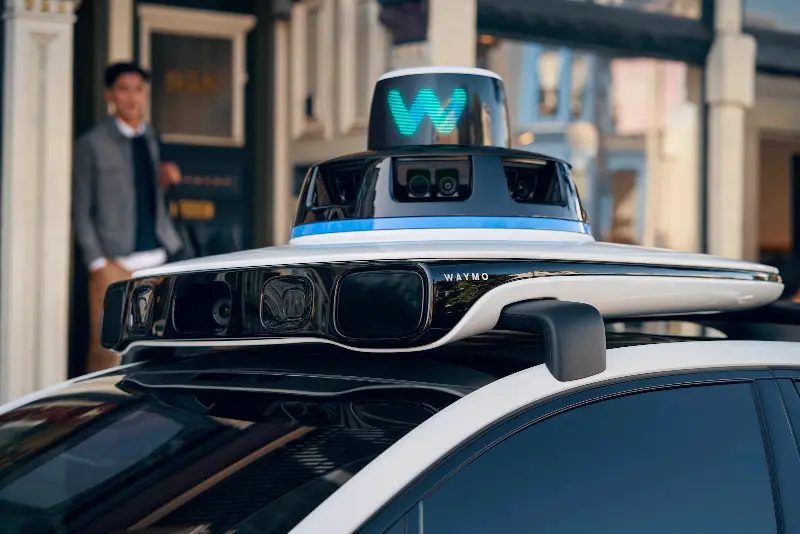
A close view of the Waymo vehicle's roof-mounted perception sensors and illuminated Waymo symbol
THE TECHNOLOGY AT THE CENTER OF THE EVENTWaymo sensor hardware
01 / TICKET BUSINESS

Earn through attendance.

180 paid places. $36,000 in target admission revenue before ticket tax.

02 / INVESTOR RELATIONSHIPS

Build the next conversation.

20 investor invitations. Qualified conversations and specific follow-up, with future investment separate from event income.

FEBRUARY 10, 2027 / 5–9 PM CSTMUSIC CITY CENTER · NASHVILLE
200guests in total
180paid ticket places
20investor invitations
7team members from California
01 / THE THESIS

The experience.
The audience. The opportunity.

Put technology professionals in direct contact with the vehicle, the engineering, and the people behind autonomy. Turn that experience into paid attendance and purposeful follow-up.

THE EXPERIENCE

Make autonomy tangible.

A live vehicle demo, engineering presentations, safety Q&A, food, drinks, and networking. A planned downtown ride adds a view from the passenger seat, subject to operating approval and a separate timed assignment.

Four-hour programFull-day venue access
THE TICKET BUSINESS

A room built for technical minds.

Invite engineers, product leaders, AI professionals, and mobility teams. Sell 180 admissions at $200 before tax, with $36,000 in target ticket revenue.

180 paid seatsEngineering + product + AI
THE SECOND OUTCOME

Turn interest into a next step.

Reserve 20 invitations for investors with a relevant mandate. Use the technical program to start qualified conversations, then pursue follow-up meetings and diligence. Future investment is separate from event income.

Relevant investor invitationsSpecific follow-up
02 / THE FINANCIALS

The ticket is fixed.
The cost is not.

The base planning case sells all 180 paid places and caters for 200 guests at $30 per guest before service and venue tax allowances. The 20 investor invitations produce no ticket income.

ADMISSION$200.00event revenue per paid seat
TICKET TAX / 9.25%$18.50collected for remittance
BUYER TOTAL$218.50processed through Stripe
ADMISSION REVENUE$36,000.00180 × $200 · ticket tax excluded
IDENTIFIED COSTS$30,685.80$30 catering case · rides unpriced
REMAINING INCOME$5,314.20before other unquoted obligations
MODEL STATUS

Headroom is not a final profit forecast.

The lower food case is already $685.80 above the original $30,000 cap. Fleet provisioning, curb operations, insurance, permits, additional staffing, and beverage overages remain unquoted. A $0 ride line means unpriced, not free.

WHERE THE BASE BUDGET GOES

Every allowance,
in view.

Identified costs include venue and production, travel, catering, outreach, a general reserve, and payment fees. The bars show each category's share of the $30,685.80 base case.

At 180 paid tickets, customers pay $39,330.00 in total. Of that, $3,330.00 is ticket tax; it is excluded from admission income.

Venue + production$12,500.00
Rental $10,000 · setup $1,500 · AV $1,000
Travel + hotel$5,910.00
Flights $3,150 · rooms $2,400 · hotel fees $360
Catering + venue charges$8,202.60
Menu $6,000 · service $1,440 · tax/zone $762.60
Marketing + investor outreach$1,500.00
General reserve$1,000.00
Payment fees / 4% allowance$1,573.20
4% of $39,330.00 charged, including ticket tax
Full budget, vendor assumptions, and catering calculation

What is in the model

The organizer's earlier vendor allowances remain provisional. Music City Center's published catering menu lists a 24% service charge, plus 9.75% sales tax and a 0.50% zone fee where applicable. The tax and zone-fee calculation below uses the full 10.25% on food plus service as a cautious planning allowance; the actual banquet event order controls.

At $30 of food and beverages per guest: $6,000 menu spend + $1,440 service charge + $762.60 tax/zone allowance = $8,202.60 catering. This replaces the old $7,200 combined catering figure.

A four-hour evening program with food and drinks may cost more than $30 a person. The venue's published $36 boxed lunch is a useful price check, but is not an evening reception quote. Its listed soda or bottled water is $4.25 each on a hosted bar. Alcohol, if offered, brings separate bar minimums, bartender fees and possible liquor tax.

180-ticket / $30 catering case

Admission revenue, tax excluded
$36,000.00
Venue, setup, AV, travel + hotel estimates
−$18,410.00
Food and beverages, 200 × $30
−$6,000.00
Venue catering service, 24%
−$1,440.00
Catering tax + zone allowance, 10.25%
−$762.60
Marketing + investor outreach
−$1,500.00
General reserve
−$1,000.00
Payment fees, 4% allowance
−$1,573.20
Headroom before fleet/other gaps
$5,314.20

The 4% fee allowance applies to the full $218.50 paid per ticket, including tax. Stripe's public standard domestic-card rate is 2.9% + 30¢, or about $6.64 per ticket; the allowance is higher because actual payment mix and account pricing can vary. This is not a verified net-profit figure.

Provisional non-catering expense plan
Non-catering expensePlanning basisAmount
Music City Center rentalFull-day access for setup, event and cleanup; organizer's price estimate$10,000
Tables, chairs and setupAllowance; reconcile with items included in venue contract$1,500
Audiovisual equipmentAllowance; technical rider pending$1,000
Round-trip flights7 people × $450; origin and dates unquoted$3,150
Hotel rooms, two nights4 rooms × $300 × 2; assumes room sharing$2,400
Hotel taxes and fees15% allowance on rooms$360
Non-catering subtotal$18,410

The organizer reports that the venue rental is confirmed, but the $10,000 price and these other amounts are still planning figures in this model. The published sample venue contract shows that some meeting-room furnishings may already be included; confirm the signed contract before spending the separate $1,500 setup allowance.

The catering case covers 200 guest meals. Confirm meals for the seven visiting staff, final beverage selections, bartender or labor charges, liquor tax if applicable, and any additional venue charges in the banquet event order. Those extras are not established in this model.

EXPLORE THE TRADE-OFFS

Change the assumptions.
See the result.

Adjust paid seats, guest reception spend, and an illustrative ride allowance. The model holds catering at 200 guests; payment fees move with paid sales.

Planning tool / not a vendor quote

$0 means the ride program is unpriced; it does not mean it is free.

Admission income
$36,000.00
Ticket tax collected
$3,330.00
Venue, travel, outreach + reserve
$20,910.00
Catering, service + venue tax
$8,202.60
Payment fee allowance
$1,573.20
Ride + curb allowance
$0.00
Total identified costs
$30,685.80
REMAINING BEFORE UNQUOTED COSTS$5,314.20

Remaining admission income after the listed allowances. Additional unquoted obligations would reduce this amount.

Break-even: 153 paid seats before other unquoted costs.$685.80 above the original $30,000 spending cap.Future investment is excluded from this result.
LOWER FOOD CASE$30 / guest

$30,685.80 identified costs; $5,314.20 left before ride spending. The original $30,000 cap is already exceeded.

HIGHER RECEPTION CASE$45 / guest

$34,787.10 identified costs; $1,212.90 left before ride spending. This is an illustration, not a venue quote.

FULLER FOOD CASE$60 / guest

$38,888.40 identified costs; a $2,888.40 gap before ride spending. More revenue or a smaller program would be needed.

Model method and research sources

Method: $18,410 non-catering estimates + $1,500 outreach + $1,000 reserve + food/drink spend × 1.24 service × 1.1025 tax/zone allowance + 4% × $218.50 × paid tickets + any ride cost. Admission income is $200 × paid tickets; ticket tax is excluded. The $30 case needs 153 paid seats to cover modeled costs with $0 ride spending; at $45 it needs 174. Adding an illustrative $5,000 ride cost raises those thresholds to 179 and 200 respectively, so the $45 case could not break even within 180 paid seats. These figures exclude final vendor variations and any new obligations.

Research reviewed September 28, 2026: Music City Center catering menu · sample venue contract · Tennessee tax manual · Stripe published pricing · Waymo for Business. Published prices and taxes can change before February 2027.

03 / RIDE OPERATIONS

Ten cars.
A different view.

Provision 10 Waymo vehicles in rotation at an approved pickup area outside Music City Center. Assign guests to a short downtown loop separately from event admission. Fleet cost and operations still need approval.

NASHVILLE / ROUTE PREVIEW

A different view of downtown.

Proposed loop
MUSIC CITY CENTER Start + return
01 / DEPARTUREMusic City Center
Illustrative route · not real-time trafficExplore the map ↗
THE PLANNED ROTATION

210 minutes.
One careful plan.

5:15–8:45 p.m., with final trips back by 8:45. The 1.65-mile loop has a roughly 10-minute drive target; boarding, unloading, and repositioning extend the complete cycle.

10carsplanned, subject to operator approval
2guestsaverage riders per modeled trip
  1. Music City Center area
  2. Demonbreun Street
  3. 2nd Avenue + Broadway
  4. 1st Avenue South
  5. Korean Veterans Boulevard + return
18-MINUTE CYCLE220 seats

20 spare seats on paper.

20-MINUTE CYCLE200 seats

Exactly 200. No recovery margin.

25-MINUTE CYCLE160 seats

40 guests without ride capacity.

Count complete trips only: floor(210 ÷ cycle minutes) × active cars × two guests. Traffic, closures, accessible boarding, weather, and fleet downtime can reduce throughput. A ticket does not guarantee a ride.

Full capacity table, route sources, and operating checks
Modeled ride capacity by complete vehicle cycle
Cycle timeComplete trips per car10 cars · 2 ridersCompared with 200 guests
15 minutes14280 seats80 spare on paper
18 minutes11220 seats20 spare on paper
20 minutes10200 seatsNo spare capacity
25 minutes8160 seats40 guests without seats
20 minutes, 9 cars active10180 seats20 guests without seats
Required operating checksConfirm the 10-vehicle fleet and cost with the operator; obtain venue and city approval for a safe loading point and traffic management; verify that the exact streets and return route are supported by Waymo operations; plan accessible ride assignments and passenger rules; check February 10 road closures and forecast congestion closer to the event; and coordinate staff, insurance, dispatch, and weather contingencies. Music City Center identifies a shuttle drop-off near 6th Avenue and Demonbreun, but that is not authorization for this Waymo pickup. Do not stage all 10 cars at the curb at once.

The route is based on current OpenStreetMap road geometry through a one-time OSRM routing query; the router's uncongested output is about 5.6 minutes and does not represent February evening traffic. The 10-minute ride is a target with variability. Broadway can be affected by special-event restrictions, so reconfirm the route against Nashville's roadway closure reports nearer the date and keep a shorter bypass ready. Inspect the route data · Music City Center planning guide · OpenStreetMap attribution.

04 / THE INVESTOR OPPORTUNITY

A conversation.
Then a next step.

Invite investors whose mandate fits autonomy and mobility. Use approved technical content and direct questions to start useful discussions, then follow through after the event.

INVITE20relevant investor invitations
QUALIFY10qualified conversations targeted
FOLLOW UP5meetings within 30 days targeted
GO DEEPER2requests for materials targeted

Investment is a separate outcome.

These are targets, not financing commitments. A qualified conversation means a relevant investor requests a specific next step. Any later investment is excluded from ticket revenue and the event cost model.

THE TECHNICAL PROGRAM

Give the room
something to examine.

Seven team members travel from California for a vehicle demo, engineering presentations on perception and planning, and an open safety Q&A. Food, drinks, and peer networking complete the four-hour guest program. Full-day rental allows setup, technical checks, and cleanup.

View the evening schedule

Measure both outcomes.

01 / COMMERCIAL

Paid tickets, event check-ins, reconciled costs, and actual remaining income.

02 / EXPERIENCE

Demo and ride participation, safety questions answered, and confidence feedback.

03 / INVESTOR FOLLOW-UP

Qualified conversations, meetings completed, deeper diligence, and actual commitments if any.

Presentations should use approved public information. Background: Waymo Driver · Waymo safety.

05 / THE DEMAND PLAN

Sell the seats.
Earn the meetings.

Start with direct invitations, useful technical content, Nashville technology communities, and targeted investor outreach. Use small paid tests to learn which messages lead to completed ticket purchases.

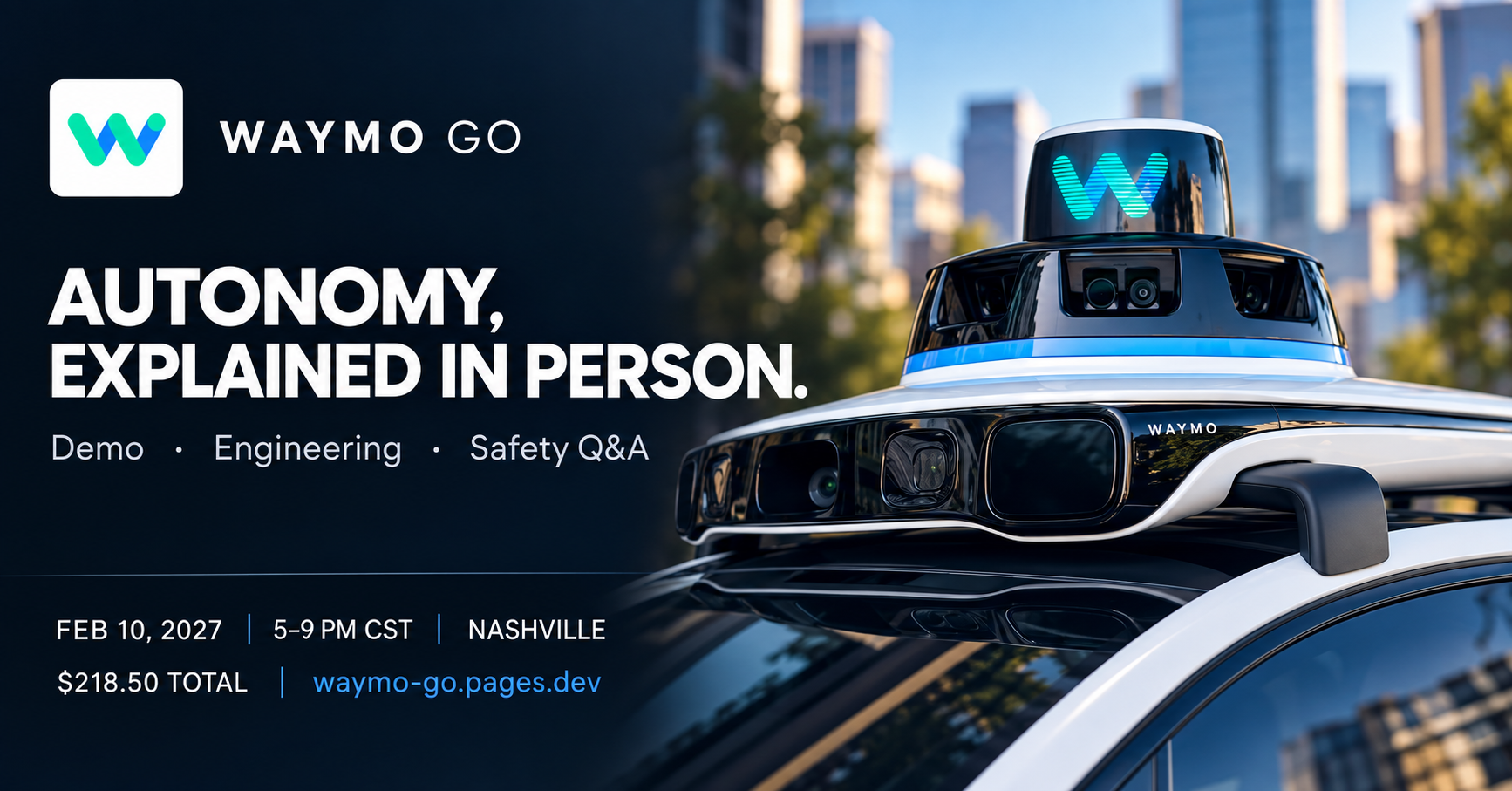
Waymo Go social ad: Autonomy, explained in person
THE CREATIVE

Engineering first.
Then an invitation.

Feed, story, and professional-feed ads lead with the event's technical value. Pricing and ticket terms belong on the ticket page.

View the ads
THE $1,500 OUTREACH CAP
Paid social tests
$600
Community placements
$300
Approved print + QR
$250
Creative adaptation
$150
Uncommitted reserve
$200

Proposed caps, not money already spent. The total equals $8.33 per target paid seat; this is a budget ratio, not a forecast acquisition cost.

Attention is only
the first step.

Tag social, opt-in email, partner, calendar, and QR links. Review completed paid tickets, actual channel spend, and investor follow-ups each week. Increase spend only when a placement earns it.

Release unused investor invitations for paid sale before the final catering guarantee. The current financial model keeps 180 paid places; any changed allocation needs an updated model.

Open the complete campaign plan
06 / THE EXECUTION PLAN

Make the plan
ready to run.

The venue rental is confirmed by the organizer. Final invoices, fleet arrangements, and approved ride operations still control the cost and capacity of the delivered event.

  1. Obtain the signed venue invoice and banquet event order. Confirm the 24% service charge, tax and zone fee treatment, food and beverage selection, and what setup furniture is already included.
  2. Get a written 10-car event proposal from Waymo for Business, including who funds the rides, vehicle availability, staffing, curb management, insurance and cancellation terms.
  3. Confirm safe pickup, Waymo-supported route, accessibility, traffic plan, and a shorter alternative if the downtown loop exceeds the time target.
  4. Set a revised spending cap or secure separate ride funding. The original $30,000 cap is exceeded even in the lower catering case.
  5. Open timed ride booking only after operating approval. Keep ticket economics separate from investor meetings and any later funding decision.
THE CASE, IN ONE LINE

Earn through attendance.
Build relationships that continue.

The ticket business is measurable. Investment is a separate potential benefit. A profitable event depends on the final quotes, attendance, and execution.

CONTINUE THE CONVERSATION

See the event.
Discuss the plan.

February 10, 2027 · 5–9 p.m. CST
Music City Center · Nashville, Tennessee